
Table Of Contents
Quick Answer
Operation Hard Ball is a US-led international crackdown, unsealed on July 7, 2026, charging 37 defendants tied to three India-based crime syndicates, including jailed gangster Lawrence Bishnoi and fugitive Goldy Brar, who are accused of ordering the 2023 killing of Hardeep Singh Nijjar in Canada.
Canada shifted its position because the RCMP stated its investigation found no evidence that Indian officials were involved in the crimes alleged in the case, undercutting the 2023 allegation that triggered the India-Canada diplomatic crisis.
Dossier Summary
On July 7, 2026, the United States Department of Justice unsealed what officials describe as the largest case ever built against India-based organized crime. Three federal grand jury indictments charged 37 defendants across the United States, Canada, and Europe following a multi-year investigation. Law enforcement arrested 24 individuals in a coordinated sweep, targeting syndicates accused of murder, multimillion-dollar extortion schemes, violent racketeering, and international narcotics smuggling.
The operation carried a blunt name: Operation Hard Ball.
The case did two things at once. It placed Lawrence Bishnoi and his lieutenant Goldy Brar at the center of an alleged global criminal enterprise. Moreover, it removed the evidentiary ground beneath the most explosive diplomatic allegation of the decade, with Canadian police stating that their investigation found no evidence of Indian government involvement in the murder of Hardeep Singh Nijjar.
This dossier documents the operation, the three syndicates it targets, the man accused of running an empire from a prison cell, and the geopolitical shift that followed. Every allegation in this file remains an allegation until tested in court.
Who Is Lawrence Bishnoi, And Why Should A Global Reader Care
Before July 2026, most readers outside South Asia had never heard the name. Inside India, it has dominated crime headlines for a decade.
Lawrence Bishnoi, 33, is a gangster from Punjab who began as a university student politician before moving into organized crime. He has been continuously imprisoned in India since 2015, faces dozens of criminal cases there, and has been the subject of Indian federal investigations into his network for years.
Two episodes made the gang internationally notorious before any American indictment existed.
In May 2022, the celebrated Punjabi singer Sidhu Moose Wala was shot dead in his car in Punjab. Goldy Brar publicly claimed responsibility for the killing on behalf of the Bishnoi gang. The murder of one of the most-streamed South Asian artists in the world put the syndicate on the radar of diaspora communities from Brampton to Bakersfield.
Bishnoi is also known in India for his long-running public threats against Bollywood star Salman Khan, framed around a decades-old blackbuck hunting case that Bishnoi treats as an offense against his community’s beliefs.
Prosecutors say this notoriety is not incidental. It is the product. Bishnoi cultivated a highly publicized online persona as a nationalist, patriot, and deeply religious figure, an image prosecutors assert was deliberately leveraged to recruit vulnerable youth and enforcers across North America.
The Operation By The Numbers
The scale separates Operation Hard Ball from every previous action against Indian organized crime abroad.
The investigation culminated in the execution of more than 50 search warrants across California, Indiana, Georgia, Canada, and Spain. In total, 37 defendants were charged across three separate federal indictments connected to three India-based criminal organizations.
Authorities arrested 24 accused, including 11 in California, three in Canada, and one in Spain, while seven others were already in custody. Bishnoi, Brar, and Rohit Godara have been declared fugitives. Ten fugitives remain sought (seven believed in the United States, two in India, and one in Europe).
On seizures, authorities described approximately 1,000 kilograms of cocaine, one kilogram of heroin, 12 firearms, and $40,000 in cash. Officers executed 23 search warrants in the Sacramento area and 11 across the Los Angeles basin, targeting alleged stash houses and command centers.
The investigation was conducted jointly by the FBI, the Los Angeles Police Department, the Royal Canadian Mounted Police, US Customs and Border Protection, and agencies across North America and Europe.
The case is being pursued under the RICO Act, a US law designed to prosecute organized criminal enterprises.
“Transnational criminal gangs who spread fear, drugs, and violence will face the full force of justice and the weight of the federal government. Working together, law enforcement in the U.S., Canada, Europe, and Asia are determined to target and dismantle these criminal organizations wherever they operate. There is no safe harbor for these thugs.”
— First Assistant United States Attorney Bill Essayli.
“Today’s coordinated operation strikes at the heart of three brutal transnational organizations that have terrorized families, exploited communities, and stolen lives through ruthless acts of violence in the U.S. and abroad.”
— Patrick Grandy, Assistant Director in Charge of the FBI’s Los Angeles Field Office
The Three Syndicates
The indictments describe three parallel and structurally distinct enterprises.
| Syndicate | Key Leaders | Primary Focus | Notable Allegations |
|---|---|---|---|
| Lawrence Bishnoi Enterprise | Lawrence Bishnoi (jailed in India), Goldy Brar (North America), Rohit Godara (Europe) | Multi-continental operation run from prison via smuggled phones and encrypted apps | Directed extortion, drug trafficking, and the 2023 Nijjar assassination to terrorize diaspora communities and expand territory |
| Jaggu Bhagwanpuria Syndicate | Jaggu Bhagwanpuria (jailed in India) | Institutional corruption and murder-for-hire | Roughly 1,000 members; allegedly colluded with corrupt Indian police to file false charges; one police chief charged with attempting to extort $400,000 from a Los Angeles family |
| Ravinder Singh Dhanda Network | Ravinder Singh Dhanda (Canada-based) | Drug trafficking | Moved hundreds of kilograms of cocaine and methamphetamine from Southern California into Canada through concealed consignments in long-haul transport |
The Alleged Business Model: Fear As Currency
Strip away the geography, and prosecutors describe an enterprise running on one asset: reputation for violence.
Authorities allege that gang members targeted Indian-origin business people and diaspora members with extortion demands, threatening that relatives in India could be harmed if payments were not made.
The amounts are not small. Between December 2025 and January 2026, the group allegedly used encrypted WhatsApp messages to demand a $5 million payment from a business owner in Thousand Oaks, California, threatening violence against the victim’s children.
Violence allegedly doubled as advertising. The indictment cites a November 2023 shooting outside a Vancouver residence, after which the syndicate claimed responsibility in a Punjabi-language Facebook post to reinforce its reputation for intimidation. The post carried the warning “no one can save you from us.”
Drugs allegedly funded the whole structure. Prosecutors say the syndicate financed itself through international cocaine trafficking and by stealing consignments from rival organizations, including an intercepted 49-kilogram cocaine shipment in California in 2024 and the alleged theft of nearly 520 kilograms of cocaine from rivals in the Los Angeles region between 2024 and 2025.
Officials believe drug profits were used to expand the network, buy weapons, and pay shooters, transforming a regional Indian gang into a transnational syndicate.
The Nijjar File
Hardeep Singh Nijjar was a Canadian citizen and Sikh separatist who campaigned for the creation of Khalistan. India had designated him a terrorist. He was shot dead outside a Sikh temple in Surrey, near Vancouver, on June 18, 2023, and his killing immediately became a flashpoint in Canada-India relations.
In September 2023, then Prime Minister Justin Trudeau publicly alleged credible allegations of Indian government involvement in the assassination. India dismissed the claims as absurd. Both countries expelled senior diplomats, froze trade negotiations, and halted ministerial dialogues.
For nearly three years, one question hung over two democracies: Who ordered the hit?
What The Indictment Actually Says
The American answer arrived in a Los Angeles courtroom, and it named no government.
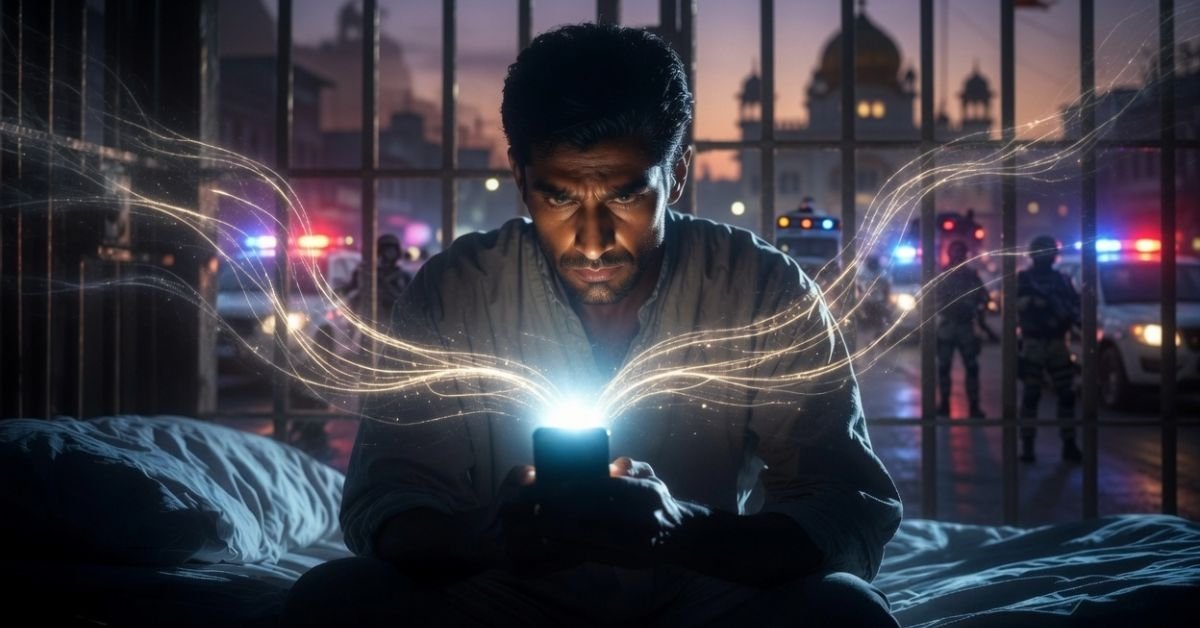
The indictment alleges that Bishnoi directed the murder conspiracy from prison using smuggled phones. At the same time, Brar coordinated the operation from North America, with Bishnoi allegedly supplying photographs and addresses of Nijjar before the killing.
The framing is specific. The indictment categorizes the assassination as a transnational criminal enterprise operation used to terrorize the wealthy Indian diaspora and reinforce extortion rackets targeting business people in California. It makes no allegation of Indian government involvement or awareness, attributing the hit entirely to the syndicate’s extortion and territory expansion strategy.
The killing also carried consequences inside Canada, contributing to Canada designating the Bishnoi enterprise a terrorist entity in September 2025.
The Canadian Shift, Stated Precisely
The most consequential words of the week came from Ottawa.
RCMP Deputy Commissioner Lisa Moreland told CBC News that the investigation found no evidence that Indian officials were involved in the crimes alleged in the announcement, and she noted that the Indian government cooperated in the investigation.
That statement is narrower than a blanket clearance. It addresses this case and these charges. Canada’s broader concerns about foreign interference and the diplomatic record of 2023 and 2024 remain separate files.
What can be said with precision is this: The murder that triggered the crisis is now framed, in the official records of both Washington and Ottawa, as the work of a criminal syndicate. The US indictment is silent on any suggestion of Indian state involvement.
Why Canada Shifted
Two forces converged.
The first was political change. After Mark Carney became Prime Minister in May 2025, Ottawa revisited its approach to India. Carney met Prime Minister Modi at the G7 Summit in Alberta. Both countries reinstated High Commissioners, resumed visa services, restarted ministerial dialogues, and began exchanging information on shared concerns.
The second was evidence. A years-long joint investigation produced a documented criminal chain of command where a political accusation had stood.
“The most effective way to combat transnational crime is for multiple law enforcement partners to team up and target criminals where they operate. Together, we disrupted the operations of organized criminals who used murder, cruelty, and fear to extort and control people in both Canada and the United States.”
— RCMP Commissioner Mike Duheme.
The Timeline
- May 2022: Sidhu Moose Wala is murdered in Punjab. Goldy Brar claims responsibility for the Bishnoi gang, making the syndicate globally infamous.
- June 18, 2023: Nijjar is shot dead in Surrey, British Columbia.
- September 2023: Trudeau alleges credible links to Indian government agents. The diplomatic crisis begins.
- November 2023: A shooting outside a Vancouver residence, followed by a public claim of responsibility by the syndicate.
- 2024 to 2025: Alleged cocaine interceptions and thefts in California build the narcotics case (including a 49 kg interception in November 2024 and theft of nearly 520 kg between March 2024 and July 2025).
- May 2025: Carney becomes Prime Minister. The reset begins.
- December 2025 to January 2026: The alleged $5 million extortion attempt in Thousand Oaks.
- June 23, 2026: Grand jury returns indictment against the Dhanda organization.
- June 25, 2026: Grand jury returns indictment against the Bhagwanpuria organization.
- July 1, 2026: Grand jury returns indictment against the Bishnoi organization. A federal arrest warrant is issued for Goldy Brar in the Central District of California.
- July 7, 2026: The indictments are unsealed. Raids sweep three continents. The RCMP states it found no evidence of Indian official involvement in the alleged crimes.
The Hunt For Goldy Brar
One man is now the face of the search.
The FBI added Brar to its Most Wanted fugitives list, offering a reward of up to $50,000, and described him as the North American leader of the Bishnoi organized crime syndicate.
He is wanted for RICO conspiracy, conspiracy to interfere with commerce by extortion, and conspiracy to distribute controlled substances. The FBI describes him as armed and dangerous and an escape risk, lists his birthplace as Punjab, and notes ties to Sacramento and Fresno in California, as well as Canada, India, and Mexico.
What This Dossier Cannot Yet Say
Precision requires stating the limits.
None of the charged individuals has been convicted. Every allegation in this file is an allegation until a court rules otherwise.
Investigators are still searching for 10 alleged fugitives, including seven believed to be in the United States, two in India, and one in Europe. With Brar at large, officials say the operation is continuing, and further arrests and legal action could follow.
The extradition question remains open. Bishnoi sits in an Indian prison facing Indian cases. Whether he ever appears in a Los Angeles courtroom is a matter of treaties and diplomacy, not indictments.
Moreover, the diplomatic file is not closed. The RCMP statement addresses this case. It does not erase the record of 2023 to 2024, and future disclosures could reshape parts of this story.
The Bottom Line
Operation Hard Ball is three stories in one file.
It is a crime story about a prisoner accused of running a three-continent enterprise through smuggled phones.
It is a policing story about the FBI, the RCMP, and European agencies treating diaspora extortion as a transnational priority rather than a community problem.
Moreover, it is a diplomatic story about how a murder that nearly broke India-Canada relations came to be framed, on the current official record of two governments, as the work of a criminal syndicate rather than a state.
The trials will take years. The record, as it stands today, has changed sides.
Additional Note
According to US authorities, one defendant in the case allegedly continued running extortion operations while sitting inside American ICE custody, using unrecorded phone lines or smuggled communication devices. The reach of these networks did not stop at the jailhouse door on either continent.
This article is based on public court filings, the US Department of Justice press release dated July 7, 2026, official statements from the FBI and RCMP, and reporting available as of July 2026. Figures reflect initial official statements and may be refined as court records are released. All defendants are presumed innocent until proven guilty in a court of law.
Author