
Table Of Contents
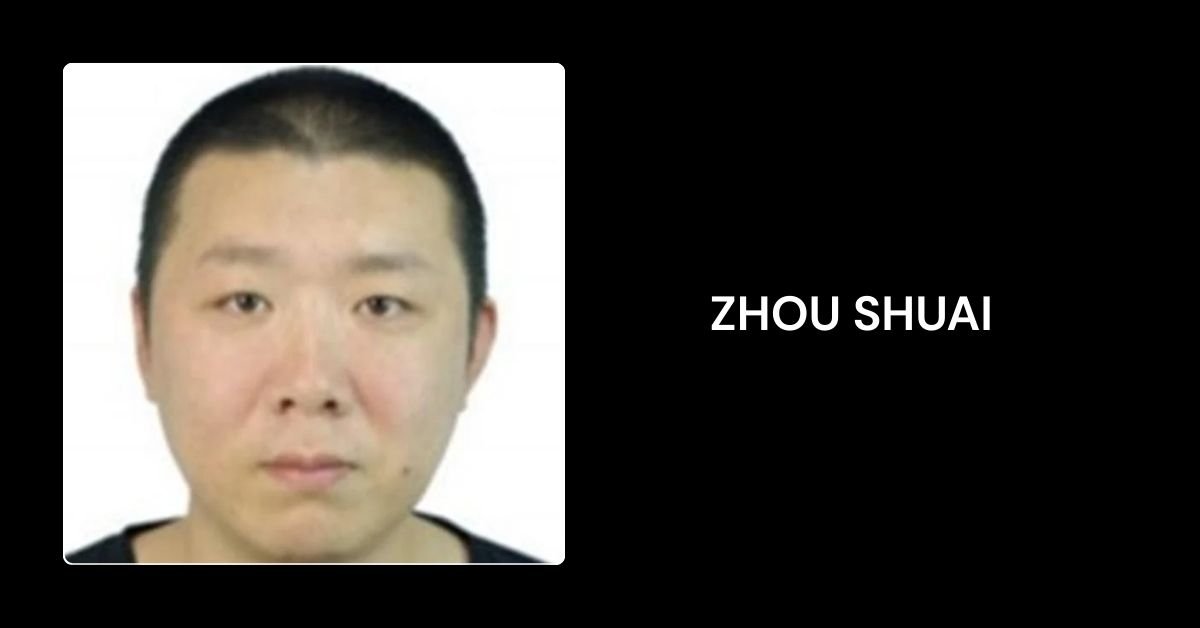
In the shadowy world of international cyber threats, few figures stand out as prominently as Zhou Shuai.
This Chinese national has become a key target of U.S. authorities due to his alleged role in sophisticated hacking operations spanning the globe.
Wanted by the FBI and sanctioned by the U.S. government, Zhou represents a blend of freelance hacking and state-aligned interests, highlighting the evolving nature of cyber espionage.
At AlphaFiles.org, we compile independent dossiers on individuals shaping global security landscapes.
This profile dives into Zhou Shuai’s background, the serious charges against him, and his place in the broader Chinese hacking ecosystem, drawing on official U.S. sources for a clear, factual overview.
Personal Profile
Zhou Shuai remains at large, with his last known residence in Shanghai, China.
Here is a quick summary of known details:
| Detail | Information |
|---|---|
| Full Name | Zhou Shuai |
| Aliases | Coldface, Coldface Chow |
| Date of Birth | July 9, 1979 |
| Place of Birth | People’s Republic of China |
| Nationality | Chinese |
| Physical Description | Black hair, brown eyes, Asian male |
| Height/Weight | Unknown |
| Last Known Location | Shanghai, China |
These details come directly from U.S. law enforcement records, emphasizing why authorities consider him a high-priority target.
The Allegations: A Campaign Of Data Theft
U.S. authorities accuse Zhou Shuai of participating in a years-long conspiracy involving unauthorized access to protected computers worldwide.
Between approximately 2018 and 2020, he allegedly worked with others to exploit network vulnerabilities, conduct reconnaissance, and install malware, such as the remote access tool PlugX, to maintain persistent access to victim systems.
Once inside, the group reportedly stole sensitive data, exfiltrated it to servers they controlled, and brokered the information for profit.
Victims included U.S. companies, defense contractors, technology firms, government entities, and even critical infrastructure.
Some stolen data was allegedly provided to customers connected to the Chinese government, including ministries involved in state security.
The charges are severe:
- Conspiracy to damage protected computers and commit wire fraud/aggravated identity theft
- Wire fraud
- Unauthorized access and intentional damage to computers
- Aggravated identity theft
- Money laundering
These actions did not just cause financial harm; they also posed a national security risk by compromising sensitive information.
Ties To APT27 And The Chinese Hacking Ecosystem
Zhou Shuai is allegedly associated with a notorious advanced persistent threat (APT) group known as APT27.
This group goes by many names in the cybersecurity world: Emissary Panda, Bronze Union, Lucky Mouse, Iron Tiger, Silk Typhoon, and others. APT27 has a reputation for targeted intrusions, often aligning with Chinese strategic interests.
Zhou has reportedly been active in China’s hacking scene since the late 1990s, starting as part of the early wave of skilled operators.
Over time, he transitioned into a “hacker for hire” and data broker, enriching himself while serving various clients, including some with ties to the People’s Republic of China (PRC) government.
He owns Shanghai Heiying Information Technology Company, established around 2010. U.S. officials describe it as a hub for China-backed hackers, employing individuals involved in global computer network exploitation.
The company has been a base for operations that blend profit motives with intelligence gathering.
This reflects a broader trend: China’s use of freelance hackers and private firms to conduct cyber operations.
These actors provide plausible deniability while advancing state goals, targeting everything from intellectual property to military-related data.
U.S. Government Response: Indictments, Sanctions, And Reward
In response to these activities, the U.S. took decisive action:
- Indictment: A federal grand jury in the District of Columbia charged Zhou and associates.
- Sanctions: The U.S. Department of the Treasury designated Zhou and his company under executive orders targeting malicious cyber actors. This freezes assets and prohibits dealings with U.S. persons.
- Reward: The Department of State’s Transnational Organized Crime Rewards Program offers up to $2 million for information leading to his arrest or conviction.
These measures underscore the seriousness of the threat and aim to disrupt networks supporting such operations.
Trivia
Here is an engaging fact: Zhou Shuai’s alias “Coldface” evokes the calm, calculated demeanor often attributed to elite hackers who operate without emotion in high-stakes digital environments. His career spans decades, making him a veteran in a field where many actors come and go quickly. He has been part of China’s cyber landscape since the dial-up era of the late 1990s!
Final Thoughts
Zhou Shuai’s case illustrates the complex intersection of profit-driven hacking and state-sponsored espionage.
As cyber threats continue to evolve, profiles like this remind us of the individuals behind the keyboards and the global efforts to hold them accountable.
At AlphaFiles.org, we track these developments to inform and educate.
If this dossier intrigued you, explore our other articles on international cyber actors, intelligence operations, and emerging global risks.
Stay informed, knowledge is the best defense in an interconnected world.
Author