
Table Of Contents
At AlphaFiles.org, we specialize in compiling clear, factual intelligence dossiers on individuals involved in significant international developments.
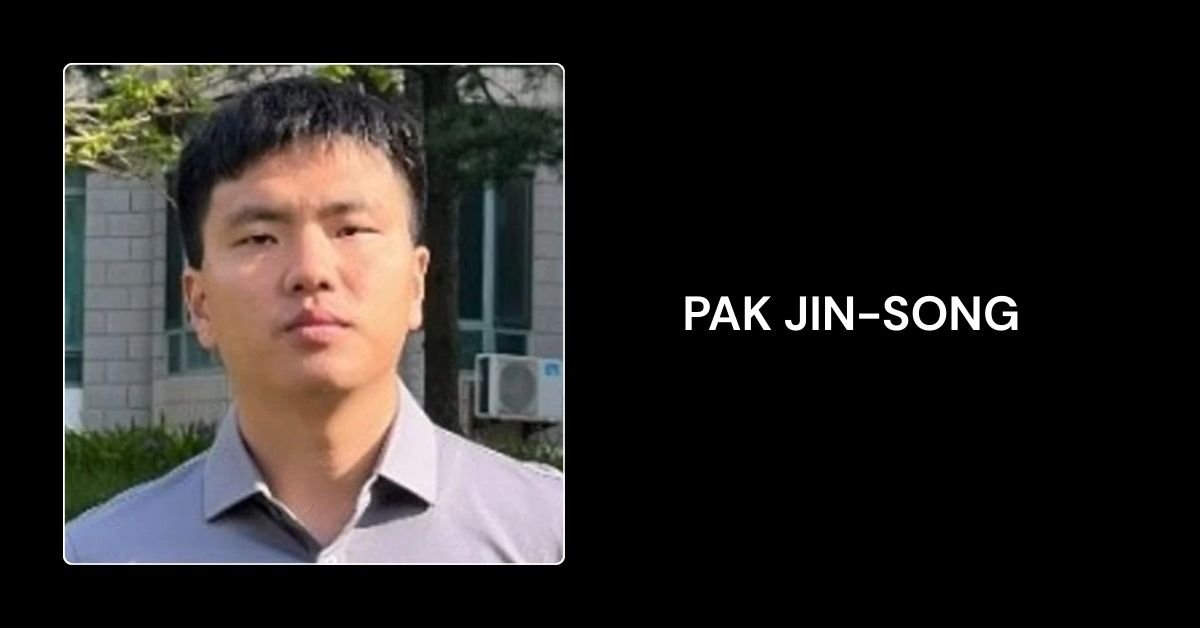
Today, we turn our attention to Pak Jin-Song, a North Korean national who stands accused of playing a central role in one of the more creative and troubling cyber-enabled fraud operations linked to the Democratic People’s Republic of Korea (DPRK), commonly known as North Korea.
Pak Jin-Song is currently wanted by the United States Federal Bureau of Investigation (FBI) for his alleged involvement in a long-running scheme designed to generate hard currency for the isolated North Korean regime.
This operation highlights how state actors can exploit the global remote work boom to bypass international sanctions.
Who Is Pak Jin-Song?
Pak Jin-Song is a North Korean citizen believed to be residing in the DPRK or possibly in a third country that offers safe harbor to such operatives.
Limited personal details are publicly available, which is common for individuals involved in clandestine state-sponsored activities.
Known Details:
- Nationality: North Korean
- Gender: Male
- Race: Asian
- Hair: Black
- Eyes: Brown
- Alias: Glaus Li (used in the fraudulent employment scheme)
No confirmed date of birth, height, weight, or other distinguishing features beyond the standard FBI description have been released, likely to protect ongoing investigative efforts.
How North Korea’s IT Workers Infiltrate Global Companies
The operation attributed to Pak Jin-Song and his co-conspirators is part of a broader DPRK strategy known as “IT worker fraud.”
In simple terms, highly skilled North Korean IT professionals, often trained in state-run programs, pose as non-North Korean remote workers (frequently pretending to be from the U.S. or other countries) to secure well-paying jobs at American and international companies.
Here is how it typically works:
- Identity Theft and Forgery: The operatives use stolen personal information from real U.S. citizens or create entirely fake identities, complete with forged documents like passports and résumés.
- Remote Access Tricks: To appear as if they are working from the U.S., they rely on “laptop farms”, private residences in the United States where facilitators host company-provided laptops and route internet traffic to make it look legitimate.
- Employment and Payment: Once hired, the North Korean workers perform the job remotely (often competently, as many are genuine IT experts), but salaries are diverted through intermediary accounts, usually in China or elsewhere, before reaching the DPRK government.
- Money Laundering: Funds are laundered through multiple transactions to hide their origin and ultimate destination.
In Pak Jin-Song’s case, authorities allege that he and his associates successfully placed workers at more than 60 U.S. companies over several years.
Payments from just a subset of these employers generated hundreds of thousands of dollars, revenue that directly supported the North Korean regime in violation of U.S. sanctions.
This is not just about stealing jobs; it is a deliberate effort to circumvent international restrictions imposed on North Korea due to its nuclear and missile programs.
The Charges Against Pak Jin-Song
Pak Jin-Song faces serious federal charges in the United States.
These stem from a detailed indictment that outlines multiple conspiracies.
| Charge | Explanation | Relevance |
|---|---|---|
| Conspiracy to Damage a Protected Computer | Agreeing to access company systems in a way that causes unauthorized changes or harm | Using fake identities to access employer networks |
| Conspiracy to Commit Wire Fraud and Mail Fraud | Planning to deceive companies through electronic or postal communications | Submitting false applications and documents |
| Conspiracy to Commit Money Laundering | Plotting to hide the source of illegally obtained funds | Routing salaries through hidden accounts |
| Conspiracy to Transfer False Identification Documents | Coordinating the creation and use of fake IDs | Forging passports and other identity papers |
| Conspiracy to Violate the International Emergency Economic Powers Act (IEEPA) | Working together to evade U.S. sanctions on North Korea | Sending revenue back to the DPRK government |
If convicted, each of these conspiracies carries significant prison time.
The case underscores how traditional financial crimes intersect with national security threats.
North Korea’s Revenue-Generation Machine
North Korea has long been under heavy international sanctions aimed at curbing its weapons development.
In response, the regime has turned to creative illicit financing methods, including cyberattacks (like bank heists), cryptocurrency theft, and these IT worker programs.
Experts estimate that thousands of North Korean IT specialists are deployed worldwide or working remotely, bringing in tens or even hundreds of millions of dollars annually.
These funds help sustain the government and its military priorities despite global isolation.
The Pak Jin-Song case is notable because it involved not just the North Korean operatives but also facilitators in the U.S. and abroad who allegedly profited from helping set up the infrastructure.
This international dimension makes disruption more challenging.
Trivia
Did you know that some North Korean IT fraud schemes have unknowingly placed regime-linked workers inside Fortune 500 companies and even sensitive government contractors? The skill level of these workers often makes them attractive hires, until the true purpose behind their employment comes to light.
Final Thoughts
Pak Jin-Song remains at large, a reminder of the ongoing challenge posed by state-sponsored cyber and financial crimes.
His case highlights the hidden risks of remote work and the importance of robust identity verification for employers.
At AlphaFiles.org, we believe informed awareness is the first step toward stronger global security.
If you found this dossier insightful, be sure to explore our other profiles on international figures and emerging threats.
Stay curious, stay vigilant, and thank you for reading!
Author