
Table Of Contents
In the shadowy world of international cyber operations, few stories highlight the ingenuity and boldness of state-sponsored schemes like Jin Sung-Il’s.
This North Korean national has been placed on the FBI’s wanted list for his alleged role in a sophisticated fraud that allowed overseas workers to secure high-paying remote jobs with American companies, all while funneling money back to the Democratic People’s Republic of Korea (DPRK), commonly known as North Korea.
These operations are part of a broader effort by the DPRK to evade strict international sanctions and generate foreign currency to support its regime.
Jin Sung-Il’s case sheds light on how everyday remote work opportunities can unknowingly become tools in geopolitical maneuvering.
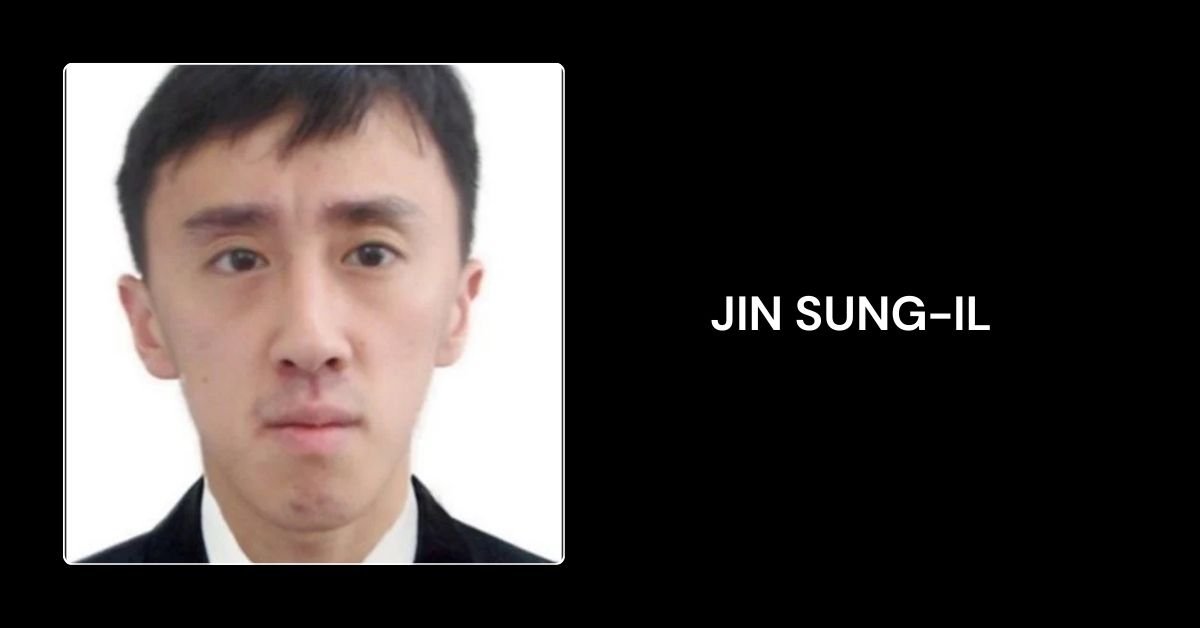
Who Is Jin Sung-Il?
Jin Sung-Il is a North Korean citizen believed to have been operating primarily from locations outside his home country, possibly in China or Russia, where many such workers are dispatched.
Authorities describe him as an Asian male with black hair and brown eyes.
To conceal his true identity, he allegedly used several aliases, including:
- Jin Song-Il
- Richard Stewart
- Pedro Alonso
- Pedro Alonso de los Reyes
- Stewart Conn
These pseudonyms helped him and his co-conspirators create convincing personas to apply for and hold jobs in the U.S. IT sector.
The DPRK Remote IT Worker Scheme Explained
North Korea faces heavy economic sanctions imposed by the United Nations and the United States due to its nuclear and missile programs.
To bypass these restrictions, the regime reportedly sends thousands of skilled IT professionals abroad or enables them to work remotely under false identities.
In what has become known as the “DPRK IT worker fraud” scheme, these individuals pose as freelancers or employees from other countries, often using stolen or forged U.S. identities.
They secure remote positions at American firms, earning salaries that are then largely redirected to the North Korean government.
A key tactic is “laptop farming,” in which U.S.-based facilitators set up laptops and internet connections at home to make it appear as though the workers are in the United States.
This fools company security checks that require domestic IP addresses or in-person verification.
Payments are laundered through overseas accounts, often in China, to hide the trail.
The earned funds help support the DPRK’s restricted economy and potentially its weapons development.
Jin Sung-Il’s Alleged Role And Impact
U.S. authorities allege that Jin Sung-Il was deeply involved in one such operation spanning several years.
Working with others, he reportedly helped secure remote IT jobs at dozens of U.S. companies.
Key details of the allegations include:
| Aspect | Details |
|---|---|
| Time Period | Approximately 2018–2024 |
| Companies Affected | At least 64 U.S. companies |
| Revenue Generated | At least $866,255 from payments by 10 companies |
| Laundering Method | Primarily through Chinese bank accounts |
| Tools Used | Forged/stolen U.S. passports and identities |
The scheme not only violated employment laws but also involved accessing company computers under pretenses, considered damage to protected systems, and laundering proceeds to conceal the fraud.
Jin was indicted alongside fellow North Korean Pak Jin-Song and three facilitators: a Mexican national and two U.S. citizens who allegedly provided on-the-ground support like hosting devices and managing payments.
The Charges Against Him
Jin Sung-Il faces serious federal charges, including:
- Conspiracy to damage a protected computer
- Conspiracy to commit wire fraud and mail fraud
- Conspiracy to commit money laundering
- Conspiracy to transfer false identification documents
- Conspiracy to violate the International Emergency Economic Powers Act (IEEPA), which enforces U.S. sanctions
A federal arrest warrant was issued for him in the Southern District of Florida, and he remains at large.
Broader Implications
Cases like Jin Sung-Il’s are not isolated. U.S. authorities have uncovered multiple similar operations, with later indictments and guilty pleas from facilitators showing the scheme’s scale.
These efforts underscore the creative ways sanctioned nations use the global digital economy to sustain themselves, while also posing risks to companies through potential data exposure and financial losses.
Trivia
Did you know that one of Jin Sung-Il’s aliases, “Pedro Alonso de los Reyes,” mimics a Spanish or Latin American name? This clever choice likely helped blend into the diverse pool of international remote workers, making detection harder in a global hiring landscape.
Final Thoughts
Jin Sung-Il’s story is a fascinating glimpse into the intersection of cyber fraud, international sanctions, and remote work.
While the allegations paint a picture of calculated deception, they also serve as a reminder for businesses to strengthen identity verification in hiring processes.
At AlphaFiles.org, we aim to document these developments in global intelligence with clarity and depth.
If this dossier intrigued you, be sure to explore our other profiles on cyber threats, sanctioned entities, and international figures.
There is always more to uncover.
Stay informed!
Author